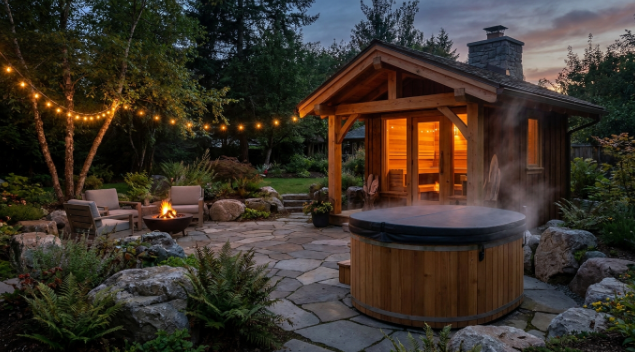
The five most common mistakes buyers make with a 6-person sauna are underestimating the electrical work, skipping a proper foundation, ignoring clearance requirements, sizing the heater to the floor plan instead of cubic footage, and buying on price without checking wood species and warranty terms. Each one is avoidable with research done before ordering rather than after delivery, when a wrong heater or missing permit turns into a costly redo. A 6-person cabin is a bigger investment than a 2-person unit, typically $5,500 to $12,000 installed, which makes these mistakes more expensive when they happen at this size.
Mistake One: Underestimating the Electrical Work
This is the mistake that catches the most buyers off guard. A heater sized correctly for six adults, generally 9 to 12 kilowatts, needs a dedicated 240-volt circuit with 40 to 60 amp capacity. Plenty of homes do not have spare breaker slots or panel capacity for a circuit that size without an upgrade, and that upgrade is not always cheap depending on the age of the electrical service. The fix is simple but often skipped: call an electrician before ordering the sauna, not after it arrives, and get a real quote for running the circuit from the panel to the installation site, including any panel work the inspection turns up.
See also: How to Know if Your NOLA Home Needs Plumbing Renovation?
Mistake Two: Skipping a Proper Foundation
A 6-person cedar cabin empty typically weighs 1,500 to 2,500 pounds, and that load needs to sit on something level and stable, not bare soil or loosely raked gravel. Buyers who set the unit directly on grass or unlevel ground often find doors that no longer close flush and bench frames that develop stress cracks within a season as the structure settles unevenly. A concrete pad, a properly base-prepared paver surface, or a deck explicitly rated for the unit’s weight are the standard options, and all three need to be level within a small tolerance before the cabin goes up, not adjusted after the fact. Drainage deserves equal attention: a base that pools water against the lowest wall accelerates rot at the sill even when the surface itself is perfectly level, so grading the surrounding ground away from the cabin is worth doing at the same time as the leveling work rather than as an afterthought.
Mistake Three: Ignoring Clearance Requirements
Manufacturers publish clearance specs for a reason: heat radiating off the cabin walls, especially near the heater side, needs distance from fences, siding, and overhanging branches to avoid scorching or fire risk over time. Most 6-person models call for at least 12 to 18 inches of clearance on the sides and back, with roofline clearance handled separately if the unit sits under a covered patio. Buyers who eyeball the placement without checking the installation manual sometimes end up needing to move a completed installation, which is a far more expensive fix than measuring twice before the pad gets poured.
Mistake Four: Sizing the Heater to Floor Space Instead of Cubic Footage
A 6-person cabin with a vaulted or higher ceiling holds meaningfully more air volume than one with a standard flat ceiling, even at the same footprint, and heater sizing needs to track that volume rather than the square footage printed on a spec sheet. Buyers who size based on floor area alone sometimes end up with a heater that runs constantly and still falls a few degrees short of target temperature, particularly once six people and an open door are factored in. A reputable seller asks about ceiling height and glass area before recommending a kilowatt rating, and it is worth pushing for that conversation rather than accepting a generic size chart.
Mistake Five: Buying on Price Without Checking Wood and Warranty
A 6-person cabin at a price meaningfully below comparable competitors is usually cutting a corner somewhere, most often in wood species, panel thickness, or heater quality. Western red cedar and Nordic spruce dominate the market for good reason: both resist warping through repeated heat cycles and release little resin. A listing that says “premium wood” without naming the species is worth treating with caution. Checking the heater warranty matters just as much. Comparing listings across sellers including Almost Heaven, Dundalk Leisurecraft, and SweatDecks.com line by line on wood species, heater wattage, and warranty length usually surfaces the real difference behind a lower price faster than comparing sticker totals alone.
How Do These Mistakes Compound at This Size?
Every one of these mistakes is more expensive at 6-person scale than at 2-person scale, because a bigger heater means a bigger electrical job, a heavier cabin means a more demanding foundation, and a higher price point means a wrong wood or warranty choice costs more to walk away from. None of this makes a 6-person sauna a bad purchase; it just means the research phase deserves more time than it would for a smaller unit, particularly around the electrical and foundation questions that show up after delivery if skipped. Buyers who budget for the electrician, the base material, and a slightly higher-tier heater up front tend to spend less in total than buyers who order the cabin first and solve each problem reactively as it appears, since reactive fixes almost always cost more than the same work planned ahead of delivery.
What Does Regular Sauna Use Actually Offer?
Once the practical mistakes are avoided, the appeal of regular sauna use holds up reasonably well in the research. A 2018 review in Mayo Clinic Proceedings summarized cardiovascular associations tied to frequent sauna bathing across multiple cohort studies. A separate 2018 paper in the American Journal of Physiology examined the physiological effects of heat and cold exposure with specific reference to Finnish sauna bathing. A systematic review in Evidence-Based Complementary and Alternative Medicine reported comparable findings for regular dry sauna use. These remain associations built mostly on Finnish cohort data, not guarantees for any individual, and buyers managing a cardiovascular condition should talk to a doctor before committing to a routine.
Frequently Asked Questions
What is the most common mistake when buying a 6 person sauna? Underestimating the electrical work. A heater sized for six adults typically draws 9 to 12 kilowatts and needs a dedicated 240-volt circuit.
How much clearance does a 6 person sauna need on each side? Most manufacturers specify at least 12 to 18 inches from combustible walls or fencing, though exact figures vary by model.
Do I need a permit to install a 6 person sauna? Often yes, particularly for the electrical circuit and sometimes the structure itself. Check local zoning before ordering.
What foundation does a 6 person sauna need? A level, well-draining base such as a concrete pad, paver base, or rated deck, since an empty cabin often weighs 1,500 to 2,500 pounds.
References
- Cardiovascular and Other Health Benefits of Sauna Bathing: A Review of the Evidence, Mayo Clinic Proceedings, 2018
- Effects of heat and cold on health, with special reference to Finnish sauna bathing, American Journal of Physiology, 2018
- Clinical Effects of Regular Dry Sauna Bathing: A Systematic Review, Evidence-Based Complementary and Alternative Medicine, 2018
By Gregory Haas